
1 OF 7
Most business owners don't lack ambition. They lack the right frame.
When growth stalls, the instinct is to fix what's visible. Sharpen the offer. Push harder on sales. Cut costs. These are reasonable moves, but they're moves made inside the business, looking at the same slice of the market you've always looked at.
What most strategy processes miss is the wider picture: the structural forces, adjacent opportunities, and market shifts that don't show up when you're focused on your immediate competitors and current customers.
That's the gap D/srupt was built to close. Not through consulting. Not through another workshop on your internal strengths and weaknesses. Through market intelligence, a rigorous, evidence-based read of how your market actually operates, used to open strategic opportunities you won't have seen before.
The Strategy Chessboard
We think about growth strategy through three distinct levels. Like chess, good strategy requires you to see the whole board, who the players are, how they're positioned, and how the rules are shifting. Most businesses spend all their time in one corner.
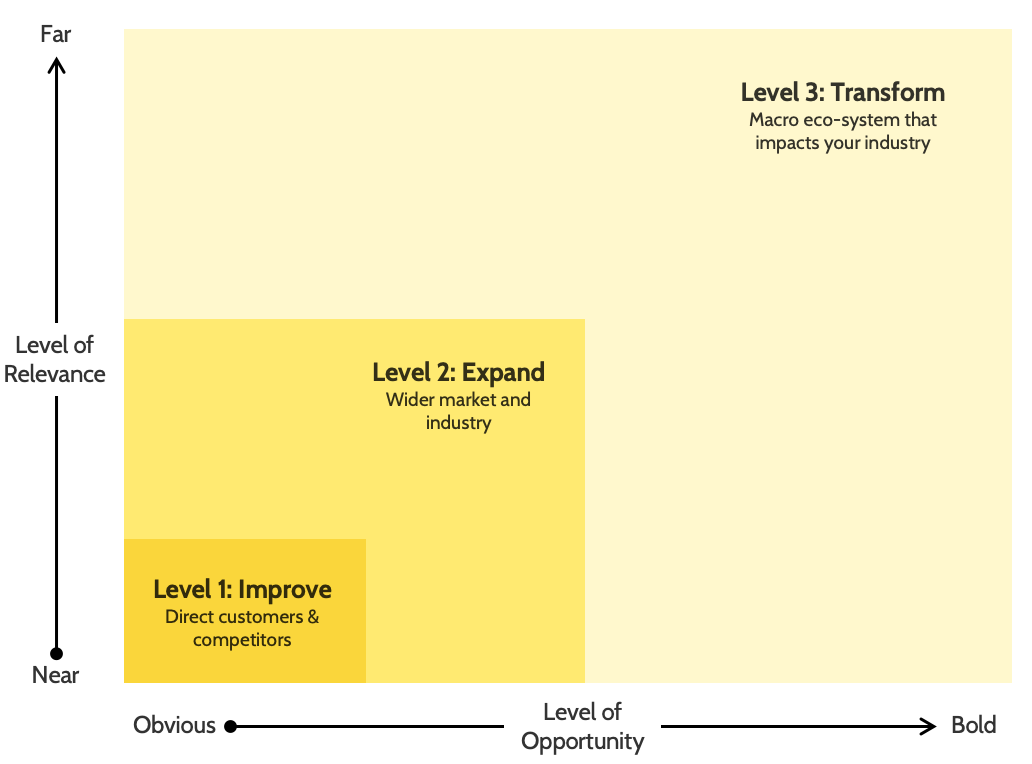
The D/srupt Strategy Chessboard — three levels of strategic opportunity
Where other consultants stop
Level 1 is the territory of traditional strategy consulting: your direct customers, your competitors, your immediate market. What are you losing? What can you do better? It's necessary analysis, but it produces incremental thinking. You get better at the game you're already playing.
D/srupt starts here, but we don't stop here. Market intelligence at Level 1 sets the factual baseline. From there, the strategic lens deliberately widens.
Level 2: Expand
Step back and the picture changes. Adjacent markets. Value-chain participants. Industry structures and the way they're shifting. At this level you start to see growth pathways that are invisible from inside your current business, partnerships, new segments, and structural moves that aren't on your radar because you haven't had a reason to look.
This is where most of the overlooked opportunities sit. Not because they're obscure, but because businesses rarely create the structured space to find them.
Level 3: Transform
At the broadest level, macro forces come into view: regulatory change, technology shifts, demographic movements, and the structural trends reshaping entire industries. These are the forces that create the boldest growth opportunities, and the biggest risks for those who aren't watching.
Businesses that operate at Level 3 aren't just responding to their market. They're anticipating it.
The discipline behind the framework
The Strategy Chessboard isn't a brainstorming exercise. The process starts with market intelligence, facts about structure, dynamics, competitive forces, and who the players are. Not assumptions. Not gut feel.
From that foundation, the strategic lens widens deliberately across all three levels. The result is a set of growth scenarios grounded in today's market realities, alongside higher-impact opportunities shaped by where the market is heading.
The practical difference: you finish with near-term moves you can act on now, and a clear line of sight to the larger opportunities most strategy processes never reach.
If your strategy conversation hasn't moved beyond your direct competitors and current customers, you're working with one level of a three-level picture. The Market Scan and Growth Program are designed to change that.