

Strategy is a science,
not an art.
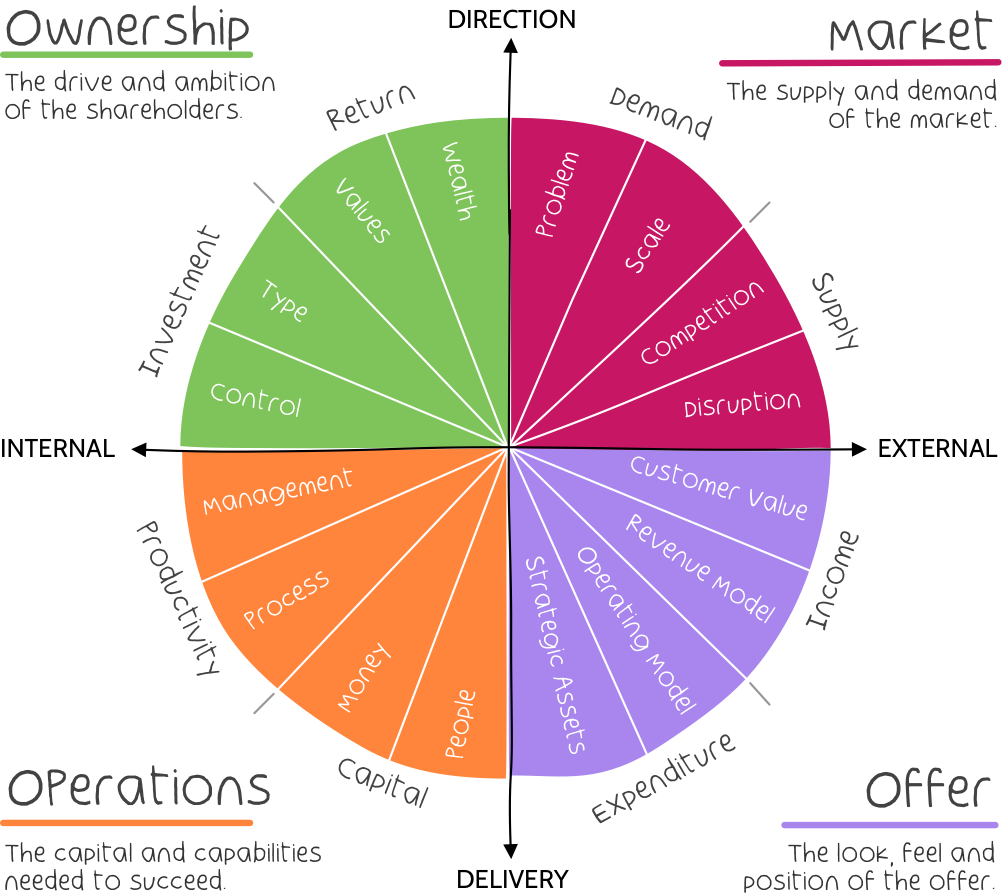
The D/srupt Framework
The Dsrupt Framework is built around four connected dimensions of your business: Market, Offer, Operations, and Ownership. Together, they give you a complete view of how your business works and how it grows. Each dimension breaks down into critical success factors and specific levers of change, the areas where real decisions get made. Ignore one, and the gaps show up somewhere else.
Market is about where the real opportunity sits. It looks at demand, competition, and disruption, helping you define who you serve, what they need, and where there is space to grow.
Offer is about how you create and capture value. It covers your proposition, pricing, and business model, and whether what you sell matches what the market is willing to pay for.
Operations is about your ability to deliver. It focuses on people, processes, systems, and capital, and whether your business is set up to perform consistently and scale.
Ownership is about what you are building, and why. It looks at ambition, risk, investment, and long-term value, and shapes the growth journey you are on.
Work through all four, and then down into the critical success factors and levers beneath them, and you get a clear, structured view of your business. From there, the job is to make better decisions in the areas that matter most.
Growth Navigation
Read the collection of articles and stories on how we think about growth